






 Start With
 Include With
What Are SRAM ICs: The Ultimate Guide
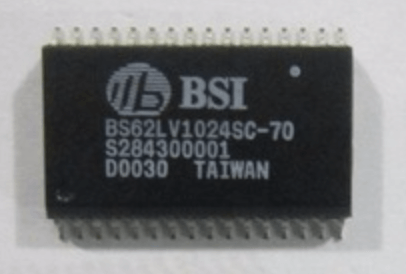
Static Random-Access Memory (SRAM) is a type of semiconductor memory renowned for its speed and reliability. Unlike Dynamic RAM (DRAM), SRAM retains data without periodic refresh cycles as long as power is supplied. This guide explores SRAM's architecture, types, applications, and future trends, offering a comprehensive understanding of its role in modern electronics.
1. How SRAM Works
SRAM stores each bit using a bistable latching circuit, typically composed of six transistors (6T cell). This structure includes two cross-coupled inverters and two access transistors. The inverters maintain the stored state (0 or 1), while the access transistors control connectivity to bit lines during read/write operations. Key characteristics:
Volatility: Requires constant power.
Speed: Faster access times than DRAM (nanoseconds vs. tens of nanoseconds).
No Refresh Needed: Simplifies control logic.
2. Architecture of SRAM ICs
Memory Cell (6T Structure)
Two Inverters: Form a latch to store data.
Two Access Transistors: Connect the cell to bit lines when addressed.
Stability: Cross-coupled design ensures data retention without refresh.
Peripheral Components
Address Decoders: Select rows (word lines) and columns (bit lines).
Sense Amplifiers: Detect minute voltage differences during reads.
Control Logic: Manages read/write operations and chip enable signals.
I/O Interfaces: Facilitate data transfer between SRAM and external devices.
3. Types of SRAM ICs
Asynchronous SRAM: Operates without a clock, using direct control signals.
Synchronous SRAM (SSRAM): Uses a clock for timing, enhancing performance in high-speed systems.
Low-Power SRAM: Optimized for battery-powered devices (e.g., IoT sensors).
Non-Volatile SRAM (nvSRAM): Integrates battery backup or flash memory to retain data during power loss.
4. Applications
Cache Memory: L1/L2/L3 caches in CPUs/GPUs leverage SRAM’s speed.
Embedded Systems: Used in microcontrollers for real-time processing.
Networking: Routers/switches employ SRAM for fast routing tables.
Automotive: Critical in ADAS, infotainment, and engine control units.
IoT: Low-power variants extend battery life in wearables and sensors.
5. Advantages and Disadvantages
Pros:
High-speed access.
Low active power consumption.
No refresh overhead.
Cons:
Lower density (6T cells occupy more space than DRAM’s 1T1C).
Higher cost per bit.
Volatility (without backup).
6. Key Specifications
Capacity: Ranges from kilobits (Kb) to megabits (Mb).
Access Time: As low as 10 ns for high-speed variants.
Voltage: Modern SRAMs operate at 1.8V–3.3V.
Power Modes: Active, standby, and sleep modes optimize energy use.
Packaging: DIP, SOIC, BGA for diverse integration needs.
7. Recent Developments
Advanced Nodes: FinFET transistors improve density and reduce leakage.
Emerging Memories: MRAM/RRAM challenge SRAM but coexist in hybrid systems.
AI/ML Integration: SRAM’s speed benefits on-chip memory in AI accelerators.
3D Stacking: Enhances density by layering memory cells.
8. Challenges
Scaling Limits: SRAM cells struggle to shrink beyond 10nm nodes.
Leakage Current: Impacts low-power designs; novel materials like high-k dielectrics mitigate this.
Competition: Technologies like STT-MRAM offer non-volatility and higher density.
9. Conclusion
SRAM remains indispensable in applications demanding speed and reliability, from consumer electronics to aerospace. While emerging memories pose competition, ongoing innovations in process technology and design ensure SRAM’s relevance. As computing evolves, SRAM will continue to underpin advancements in AI, automotive systems, and beyond.
This guide provides a foundational understanding of SRAM ICs, emphasizing their technical nuances and evolving role in the tech landscape. For engineers and enthusiasts, SRAM represents a critical component where performance cannot be compromised.
Kevin Chen
Founder / Writer at Rantle East Electronic Trading Co.,Limited
I am Kevin Chen, I graduated from University of Electronic Science and Technology of China in 2000. I am an electrical and electronic engineer with 23 years of experience, in charge of writting content for ICRFQ. I am willing use my experiences to create reliable and necessary electronic information to help our readers. We welcome readers to engage with us on various topics related to electronics such as IC chips, Diode, Transistor, Module, Relay, opticalcoupler, Connectors etc. Please feel free to share your thoughts and questions on these subjects with us. We look forward to hearing from you!