






 Start With
 Include With
How To Choose Driver ICs: The Ultimate Guide
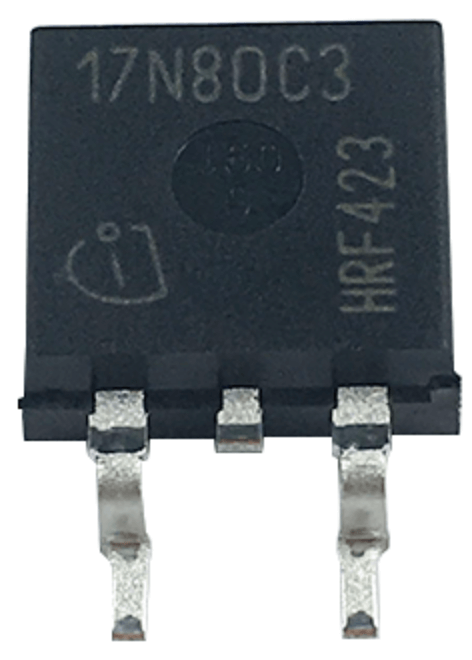
Driver ICs (Integrated Circuits) are essential components in modern electronics, serving as the interface between control systems and power devices. They are widely used in applications such as motor control, LED lighting, display drivers, and power management. Selecting the right driver IC is critical to ensuring optimal performance, efficiency, and reliability of your system. This guide will walk you through the key factors to consider when choosing driver ICs and provide insights to help you make informed decisions.
1. Understand Your Application Requirements
The first step in choosing a driver IC is to clearly define the requirements of your application. Different applications have unique demands, and the driver IC must be tailored to meet these needs. Consider the following:
a. Type of Load
Motors: Brushless DC (BLDC), stepper, or brushed DC motors.
LEDs: High-power LEDs, RGB LEDs, or LED matrices.
Displays: LCD, OLED, or TFT displays.
Other Loads: Relays, solenoids, or piezoelectric devices.
b. Voltage and Current Requirements
Determine the operating voltage range and the maximum current the driver IC needs to handle.
Ensure the driver IC can support both the peak and continuous current demands of your load.
c. Control Interface
Identify the type of control interface required, such as PWM (Pulse Width Modulation), I2C, SPI, or analog control.
Consider compatibility with your microcontroller or control system.
d. Environmental Conditions
Assess the operating environment, including temperature, humidity, and exposure to vibrations or shocks.
Choose a driver IC with appropriate ratings for your environment.
2. Key Parameters to Evaluate
Once you understand your application requirements, evaluate the following parameters to narrow down your options:
a. Output Current and Voltage Ratings
Ensure the driver IC can deliver the required current and voltage to your load.
Check for overcurrent protection features to prevent damage.
b. Efficiency
Look for driver ICs with high efficiency to minimize power losses and heat generation.
Switching driver ICs are generally more efficient than linear drivers.
c. Switching Frequency
For applications like LED drivers or motor control, the switching frequency affects performance and noise.
Higher switching frequencies allow for smaller external components but may increase EMI (Electromagnetic Interference).
d. Protection Features
Overcurrent protection (OCP), overvoltage protection (OVP), and thermal shutdown are essential for reliability.
Short-circuit protection and reverse polarity protection can also be beneficial.
e. Package and Size
Choose a package that fits your PCB layout and thermal management requirements.
Common packages include QFN, SOP, and DIP.
f. Cost
Balance performance and features with your budget.
Consider the total cost of ownership, including external components and assembly.
3. Types of Driver ICs
Different types of driver ICs are designed for specific applications. Understanding these types will help you make the right choice:
a. Motor Driver ICs
Used to control the speed and direction of motors.
Key features: H-bridge configuration, current sensing, and fault detection.
Examples: L298N, DRV8833, and TB6612FNG.
b. LED Driver ICs
Provide constant current or voltage to LEDs.
Key features: Dimming control, high efficiency, and thermal management.
Examples: LM3414, TLC5940, and MAX7219.
c. Display Driver ICs
Drive LCD, OLED, or TFT displays.
Key features: High resolution, low power consumption, and integrated gamma correction.
Examples: SSD1306, ST7735, and ILI9341.
d. Power Management ICs
Regulate and distribute power in electronic systems.
Key features: Voltage regulation, power sequencing, and load switching.
Examples: LM7805, LM2596, and TPS5430.
4. Thermal Management
Driver ICs often generate heat during operation, especially in high-current applications. Proper thermal management is crucial to ensure reliability and longevity:
a. Thermal Resistance
Check the thermal resistance (RθJA) of the driver IC.
Lower thermal resistance means better heat dissipation.
b. Heat Sinks and PCB Layout
Use heat sinks or thermal pads if necessary.
Optimize PCB layout to minimize thermal hotspots.
c. Thermal Shutdown
Ensure the driver IC has built-in thermal shutdown protection to prevent overheating.
5. Compatibility and Integration
Ensure the driver IC is compatible with your system and can be easily integrated:
a. Control Signal Compatibility
Verify that the driver IC supports the control signals from your microcontroller or processor.
b. External Components
Check if the driver IC requires additional components like capacitors, resistors, or inductors.
Minimize the number of external components to reduce cost and complexity.
c. Software and Firmware Support
Look for driver ICs with available libraries, APIs, or example code to simplify development.
6. Reliability and Longevity
Choose driver ICs from reputable manufacturers with a proven track record of reliability:
a. Quality and Certification
Ensure the driver IC meets industry standards and certifications (e.g., RoHS, ISO).
b. Lifetime and Durability
Consider the expected lifetime of the driver IC, especially for mission-critical applications.
c. Manufacturer Support
Choose manufacturers that provide technical support, documentation, and design resources.
7. Future-Proofing Your Design
Consider future requirements and scalability when selecting a driver IC:
a. Scalability
Choose a driver IC that can handle potential increases in load or performance requirements.
b. Upgradability
Ensure the driver IC can be easily replaced or upgraded if needed.
c. Flexibility
Look for driver ICs with programmable features or adjustable parameters.
Conclusion
Choosing the right driver IC is a critical step in designing efficient and reliable electronic systems. By understanding your application requirements, evaluating key parameters, and considering factors like thermal management and compatibility, you can select a driver IC that meets your needs. Always prioritize quality and reliability, and don’t hesitate to consult with manufacturers or experts for guidance. With the right driver IC, you can ensure optimal performance and longevity for your application.
Kevin Chen
Founder / Writer at Rantle East Electronic Trading Co.,Limited
I am Kevin Chen, I graduated from University of Electronic Science and Technology of China in 2000. I am an electrical and electronic engineer with 23 years of experience, in charge of writting content for ICRFQ. I am willing use my experiences to create reliable and necessary electronic information to help our readers. We welcome readers to engage with us on various topics related to electronics such as IC chips, Diode, Transistor, Module, Relay, opticalcoupler, Connectors etc. Please feel free to share your thoughts and questions on these subjects with us. We look forward to hearing from you!