






 Start With
 Include With
What is Lithium CR1620 Battery: A Comprehensive Guide
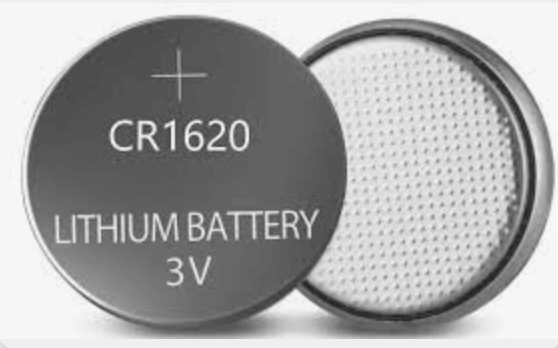
The Lithium CR1620 battery is a compact, high-performance power source widely used in small electronic devices. As a member of the lithium button cell family, it offers reliable energy storage with a long shelf life. This guide explores its specifications, applications, and safety considerations.
Technical Specifications
Chemistry: Lithium manganese dioxide (Li-MnO?), a primary (non-rechargeable) cell.
Voltage: 3 volts (nominal), providing stable output until depletion.
Dimensions: 16mm diameter × 2.0mm height.
Capacity: ~75mAh (milliampere-hours), varying slightly by manufacturer.
Operating Temperature: -30°C to 60°C, suitable for diverse environments.
Shelf Life: Up to 10 years when stored properly (cool, dry conditions).
Applications
CR1620 batteries power devices requiring compact, long-lasting energy:
Wearables: Fitness trackers, watches.
Electronics: Calculators, key fobs, LED lights.
Medical Devices: Thermometers, glucose monitors.
Backup Power: Memory preservation in electronics.
Advantages
High Energy Density: Delivers consistent power in a small form.
Long Shelf Life: Minimal self-discharge (~1% annually).
Temperature Resilience: Performs in extreme conditions.
Lightweight: Ideal for portable devices.
Disadvantages
Non-Rechargeable: Single-use, requiring proper disposal.
Environmental Impact: Contains lithium; improper disposal harms ecosystems.
Ingestion Risk: Dangerous if swallowed, especially for children.
Safety Considerations
Handling: Avoid short-circuiting, puncturing, or exposing to high heat.
Disposal: Recycle via designated facilities; never incinerate.
Child Safety: Store out of reach; seek immediate help if ingested.
Comparison with Similar Batteries
CR2032: Thicker (3.2mm), higher capacity (~225mAh).
CR2016: Thinner (1.6mm), lower capacity (~90mAh).
Alkaline Cells: Lower voltage (1.5V); not interchangeable.
Proper Usage & Storage
Installation: Ensure correct polarity (+ side typically faces up).
Storage: Keep in original packaging in cool, dry environments.
Replacement: Use only CR1620 or manufacturer-approved equivalents.
FAQs
Can I substitute CR1620 with CR2016? No—different thicknesses may cause fit issues.
How long does it last? Varies by device usage; e.g., a 0.1mA drain could yield ~750 hours.
Are they rechargeable? No—attempting to recharge may cause leakage or rupture.
Environmental Impact
Lithium batteries require recycling to prevent soil and water contamination. Many retailers offer recycling programs.
Conclusion
The CR1620 is a versatile, reliable power source for compact electronics. Understanding its specs and safety ensures optimal performance and environmental responsibility. Always prioritize manufacturer guidelines for device compatibility and handling.
Kevin Chen
Founder / Writer at Rantle East Electronic Trading Co.,Limited
I am Kevin Chen, I graduated from University of Electronic Science and Technology of China in 2000. I am an electrical and electronic engineer with 23 years of experience, in charge of writting content for ICRFQ. I am willing use my experiences to create reliable and necessary electronic information to help our readers. We welcome readers to engage with us on various topics related to electronics such as IC chips, Diode, Transistor, Module, Relay, opticalcoupler, Connectors etc. Please feel free to share your thoughts and questions on these subjects with us. We look forward to hearing from you!