






 Start With
 Include With
What Is Mass Air Flow (MAF) Sensor: A Comprehensive Guide
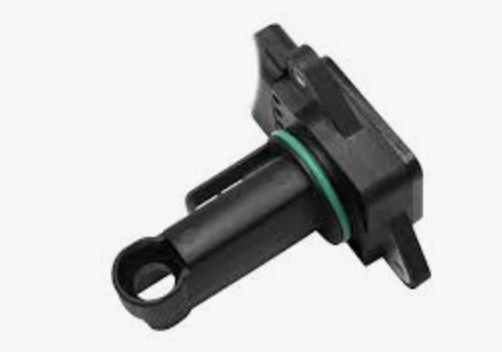
The Mass Air Flow (MAF) sensor is a critical component in modern internal combustion engines, playing a pivotal role in optimizing performance, fuel efficiency, and emissions. Located between the air filter and the throttle body, it measures the mass of air entering the engine, enabling the Engine Control Unit (ECU) to balance the air-fuel mixture precisely.
Function of the MAF Sensor
The MAF sensor's primary function is to determine the mass of air flowing into the engine. Unlike volume-based measurements, mass accounts for air density changes due to temperature and altitude, ensuring accurate fuel delivery. This data allows the ECU to calculate the optimal fuel injection quantity, maintaining the stoichiometric air-fuel ratio (14.7:1 for gasoline engines) for efficient combustion.
Types of MAF Sensors
Hot Wire MAF Sensor:
Utilizes a heated wire exposed to incoming air. As airflow increases, the wire cools, requiring more current to maintain its temperature. This current change is proportional to air mass.
Common in modern vehicles due to high accuracy and fast response.
Hot Film MAF Sensor:
Similar to hot wire but uses a thin film element, offering enhanced durability and reduced susceptibility to contamination.
Vane Meter (Flap-Type) MAF Sensor:
A mechanical flap moves with airflow, connected to a potentiometer that measures displacement. Less common today due to airflow restriction and mechanical wear.
Karman Vortex MAF Sensor:
Measures airflow by detecting vortices formed around a bluff body. The vortex frequency correlates with airflow speed. Rare in modern applications.
Working Principle
The MAF sensor converts airflow data into an electrical signal (voltage or frequency). For example, in hot wire sensors, the ECU monitors the current needed to keep the wire at a constant temperature. This current is translated into grams per second (g/s) of air mass, which the ECU uses with data from other sensors (e.g., oxygen, throttle position) to adjust fuel injection and ignition timing.
Symptoms of a Faulty MAF Sensor
Check Engine Light: Often triggered by MAF-related error codes (e.g., P0101-P0104).
Poor Performance: Hesitation, stalling, or rough idling due to incorrect air-fuel mixtures.
Increased Fuel Consumption: Rich or lean conditions reduce efficiency.
Emissions Issues: Failed emissions tests from improper combustion.
Black/White Exhaust Smoke: Indicative of overly rich (black) or lean (white) mixtures.
Testing and Maintenance
Diagnostic Tools: Use an OBD-II scanner to retrieve trouble codes and monitor live data (e.g., MAF readings at idle vs. RPM).
Visual Inspection: Check for dirt, oil, or damage. Contaminants often stem from a faulty air filter or over-oiled aftermarket filters.
Electrical Testing: Measure voltage/output signal with a multimeter; deviations from manufacturer specs indicate issues.
Cleaning: Use MAF-specific cleaner to gently remove debris without damaging sensitive elements.
Replacement: Ensure compatibility with the vehicle’s make/model. Some sensors require ECU recalibration.
Importance of the MAF Sensor
Engine Performance: Directly impacts power output and drivability.
Fuel Efficiency: Precise air measurement avoids wasteful fuel use.
Emissions Control: Maintains catalytic converter efficiency, reducing pollutants like NOx and CO.
Common Issues and Solutions
Contamination: Regular air filter replacement and careful cleaning prevent buildup.
Electrical Failures: Inspect wiring and connectors for corrosion or damage.
Wear and Tear: High-mileage sensors may degrade, necessitating replacement.
MAF vs. MAP Sensors
While MAF sensors measure air mass directly, Manifold Absolute Pressure (MAP) sensors infer airflow via intake manifold pressure. Turbocharged engines often use both for enhanced accuracy under varying boost conditions.
Conclusion
The MAF sensor is indispensable for modern engine management, bridging air intake measurement to optimal combustion. Regular maintenance, such as cleaning and timely replacement, ensures longevity and performance. Understanding its role and addressing issues promptly can prevent costly repairs and sustain vehicle efficiency. As automotive technology evolves, MAF sensors continue to refine the balance between power, economy, and environmental responsibility.
Kevin Chen
Founder / Writer at Rantle East Electronic Trading Co.,Limited
I am Kevin Chen, I graduated from University of Electronic Science and Technology of China in 2000. I am an electrical and electronic engineer with 23 years of experience, in charge of writting content for ICRFQ. I am willing use my experiences to create reliable and necessary electronic information to help our readers. We welcome readers to engage with us on various topics related to electronics such as IC chips, Diode, Transistor, Module, Relay, opticalcoupler, Connectors etc. Please feel free to share your thoughts and questions on these subjects with us. We look forward to hearing from you!