






 Start With
 Include With
What is MSP430 Microcontroller: A Comprehensive Guide
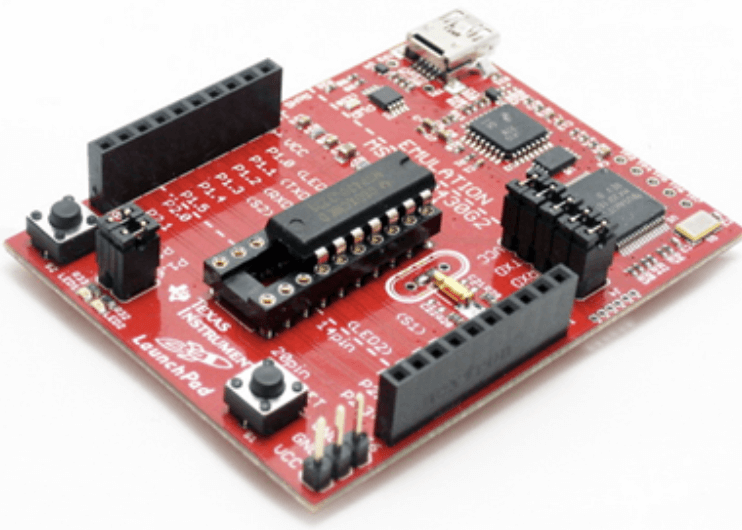
The MSP430 microcontroller family, developed by Texas Instruments (TI), is renowned for its ultra-low power consumption and versatility in embedded systems. Introduced in the late 1990s, this 16-bit RISC-based microcontroller has become a cornerstone in applications demanding energy efficiency, such as medical devices, IoT sensors, and industrial systems. Its blend of performance, power management, and integrated peripherals makes it a preferred choice for battery-operated and energy-sensitive designs.
Architecture Overview
CPU Core
The MSP430 features a 16-bit RISC CPU with a von Neumann architecture, utilizing a single memory bus for both instructions and data. Its compact instruction set (27 core instructions) enhances efficiency, enabling rapid execution and reduced code size. The CPU supports multiple addressing modes and a vectored interrupt system for responsive handling of real-time events.
Memory Organization
Memory configurations vary across models, typically including:
Flash Memory: Up to 512 KB for code storage.
RAM: Up to 66 KB for data.
FRAM (Ferroelectric RAM): In FRAM variants (e.g., MSP430FRxxxx), offering non-volatile storage with faster writes, lower power, and higher endurance (10^15 cycles) compared to Flash.
Clock System
The flexible clock system comprises:
MCLK (Master Clock): Drives the CPU, up to 25 MHz.
SMCLK (Sub-Main Clock): For peripherals.
ACLK (Auxiliary Clock): Sourced from a 32 kHz oscillator for low-power modes.
Clock sources include internal DCO (Digitally Controlled Oscillator) and external crystals.
Peripherals
Integrated peripherals enhance functionality:
12-bit ADC: For precision analog measurements.
Timers: Capture/PWM capabilities.
Communication Interfaces: UART, SPI, I2C, USB.
Analog Comparators and Op-Amps.
LCD Drivers: For display interfaces.
AES Accelerator: Encryption in select models.
Key Features
Ultra-Low Power Consumption
The MSP430 excels in power efficiency:
Active Mode: As low as 100 μA/MHz.
Low-Power Modes (LPM):
LPM3: 2 μA with ACLK active.
LPM4: 0.1 μA (RAM retention).
Fast wake-up times (≤1 μs) ensure responsiveness in intermittent operation.
FRAM Technology
FRAM variants combine RAM and Flash benefits, enabling rapid data logging with minimal energy, ideal for applications like wearable tech and smart meters.
Development Ecosystem
TI offers robust support:
MSP430Ware: Libraries, code examples, and documentation.
Energia: Arduino-like IDE for beginners.
Code Composer Studio (CCS): Advanced IDE with debugging tools.
Hardware Tools: LaunchPad kits (e.g., MSP-EXP430G2) and MSP-FET debuggers.
Applications
Medical Devices
Used in portable glucose monitors, infusion pumps, and hearing aids due to reliable low-power operation.
Industrial and Automotive
Deployed in flow meters, HVAC controls, and tire pressure sensors, leveraging robust performance in harsh environments.
Consumer Electronics
Powering smartwatches (e.g., TI eZ430 Chronos), remote controls, and digital thermostats.
IoT and Energy Harvesting
Ideal for wireless sensor nodes and energy-harvesting systems, where minimal power draw extends battery life.
Development Tools and Ecosystem
IDEs: CCS for advanced users; Energia for simplicity.
Debugging: MSP-FET and XDS110 debug probes.
Libraries: DriverLib for peripheral management.
Community: Active forums and TI E2E support.
Conclusion
The MSP430 microcontroller stands out in ultra-low-power embedded design, offering a balance of efficiency, flexibility, and integration. With diverse family variants, extensive development tools, and proven applications across industries, it remains a top choice for engineers tackling energy-constrained challenges. As IoT and portable devices grow, the MSP430's role in innovation continues to expand, underpinned by TI's commitment to advancing mixed-signal technology.
Kevin Chen
Founder / Writer at Rantle East Electronic Trading Co.,Limited
I am Kevin Chen, I graduated from University of Electronic Science and Technology of China in 2000. I am an electrical and electronic engineer with 23 years of experience, in charge of writting content for ICRFQ. I am willing use my experiences to create reliable and necessary electronic information to help our readers. We welcome readers to engage with us on various topics related to electronics such as IC chips, Diode, Transistor, Module, Relay, opticalcoupler, Connectors etc. Please feel free to share your thoughts and questions on these subjects with us. We look forward to hearing from you!